Select your preferred language…
Select your preferred language…
Select your preferred language…





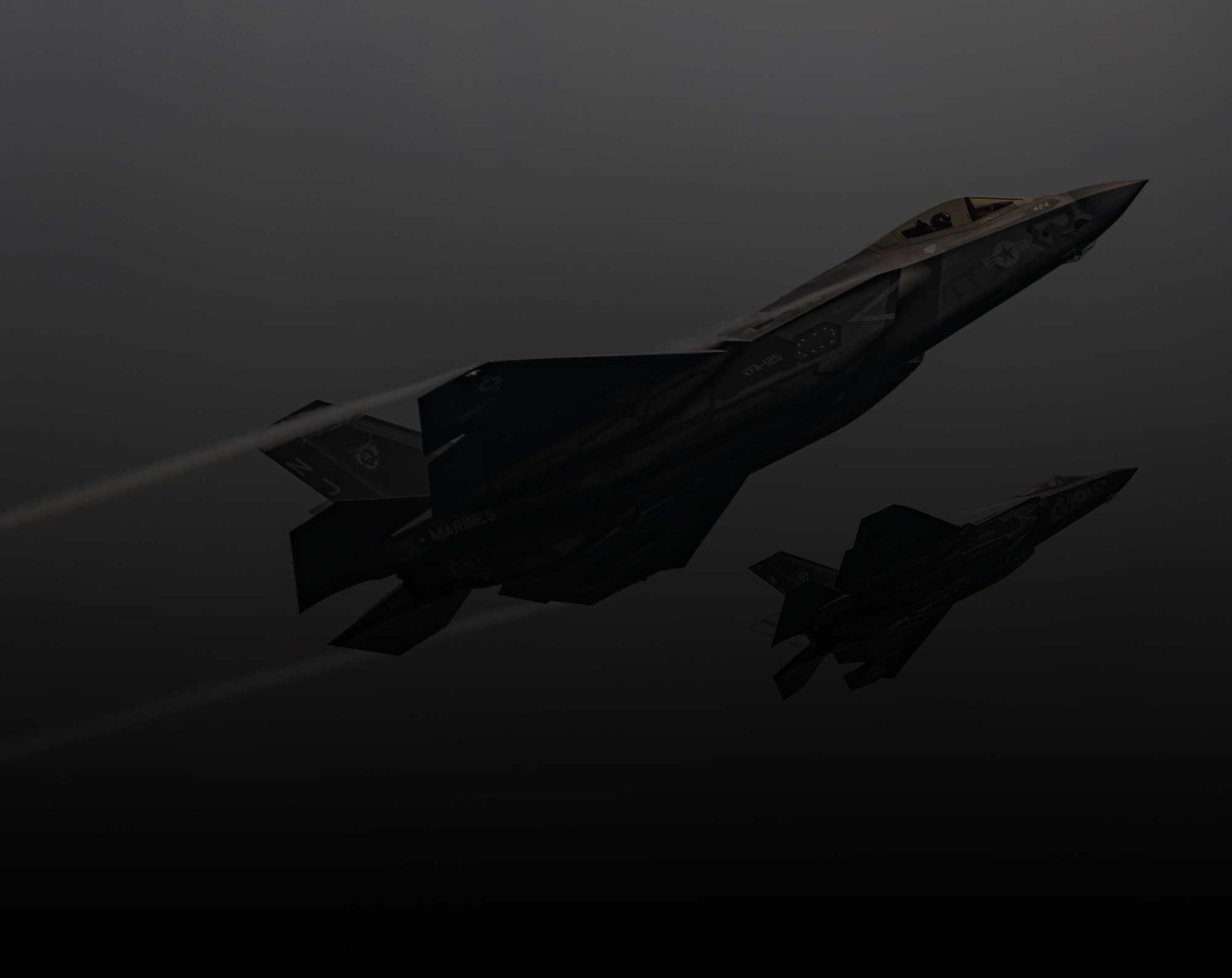



 When did Dewisland, Pembrokeshire or humankind ever vote for the US military to control all of space?When did Dewisland, Pembrokeshire or humankind ever vote for the US military to control all of space?
As the US commits to openly declare its intentions to achieve ‘control of space', 'domina[tion]' of 'the space medium', and 'an ability to deny others the use of space’1, against the wishes of the vast majority of all nations on Earth, the purpose of anti-satellite weapon system DARC radar becomes pretty, well, self-explanatory.
It’s DARC by name. And it sure is dark by nature.
DARC, which stands for ‘Deep Space Advanced Radar Concept,’ is a radar installation that precisely tracks foreign countries’ military satellites in space, so that British, US and Australian aircraft can fly 60,000 ft upwards2, and blow them into thousands of pieces of what becomes orbiting debris (a kind of ‘space trash’) with anti-satellite missiles. DARC part of the US military's SDA (Space Domain Awareness) programme,3 which has been revealed4 to provide support for 'space fires' (that is, attacks on objects in space).
The name of the game is pretty much all about turning space, already littered with over eleven thousand human-launched objects and over 130 million shards of space debris,5 into a kind of big landfill—and then doing nothing to clean it up.
If all you hear from is a media ecology where three publishers control 90% of print reach and 40% of online reach (like, say, the UK media),6 you’d be forgiven for thinking that DARC is a necessary defence against a load of irrationally aggressive foreign powers, and that the US has nothing to do with the aggression.
You’d think that it was Russia that had first tested anti-satellite weapons, and that that’s the aggression that the US was responding to. You’d think that it was nations like China and Russia that had no interest in pursuing a United Nations-led drive to demilitarise space and allow it to be the shared human global commons it should be, and that it was in fact the US that had initiated, and was leading, such a drive.
The problem, of course, is that the truth is the complete opposite of everything the United States says.
After abandoning initial experiments into anti-satellite weapons in 1983, Russia initiated its first successful anti-satellite weapon test, the A-235 ’Nudol,’ in 2015,7 and China in 2007.8 The US performed its first successful anti-satellite weapons test thirty years earlier than Russia, in 1985, when an F-35 jet fired an ASM-135 anti-satellite weapon at the Solwind solar observatory.9
In United Nations treaties co-written in 2002, 2008 and 2014, Russia and China worked to try to bring up to speed the 1967 Outer Space Treaty (which prevented states claiming sovereignty over space),10 one notable General Assembly meeting in 2014 resulting in 126 countries voting against the first placement of weapons in outer space. The United States, meanwhile, was one of just four countries to vote for such weapons, its actions, in typical US style, bearing no resemblance to its public claims to care about space as a domain for human co-operation, peace, or scientific development.11
While the rest of the world tries to keep alive the diplomatic vision of space as a global commons that is not within the sovereignty or dominance of any one race,12 the US spreads the disinformation that it is under attack from space by other nations, while provoking the very defensiveness it claims it is the victim of through its own escalatory behaviour.
Sure: DARC is a US vanity project with no purpose other than to keep on life support a US expansionism increasingly irrelevant in a multipolar world whose powers, unlike the US, are proving with their successes that they no longer need to rely on the west's rapidly deteriorating model of imperial aggression and resource theft in order to be more prosperous than us.
But further than this, DARC is also just the US's latest illegal act under international law—except, of course, one that it wants to make the UK, and specifically the county and Council of Pembrokeshire, complicit in.
The general decrease in the stability of global security created by the US’s—or any country’s—escalatory attempts to develop a weapons system like DARC would have been bad on their own.
But somehow, it gets more DARC. The worst-case cost of a significant anti-satellite weapon attack by a nation like the United States, just as in the case of more conventional weapons of mass destruction like nuclear, biological or AI weapons, is a uniquely dangerous risk that makes DARC a whole new kind of global ticking time bomb.
When the US launched the first ever anti-satellite weapon in 1985, a satellite 300 miles up was shattered into 285 separate tracked fragments of space debris as it was destroyed, some of the fragments being pushed into an orbit as much as 300 miles higher, producing a debris cloud that continued to orbit the earth for another 20 years, and drawing international condemnation.13
Why such condemnation, you might think? A bit of space trash is bad, but it won’t mean the end of the world. Except that it could.
As the number of satellites in orbit around the earth rapidly increases, with an incredible 42,000 planned by SpaceX alone as of 2021,14 scientists have been urgently warning for decades of a highly dangerous scenario that is becoming more and more probable by the hour: the Kessler Syndrome.
This syndrome describes an increasingly probable scenario where the scraps of metallic space debris that are orbiting the earth, travelling at tens of thousands of miles an hour and carrying the energy of bullets or even small bombs (even at their smallest) could, if they were to destroy just one satellite, create a domino effect where one satellite’s debris destroys the next satellite, and the next, leading, potentially, to the destruction of tens of thousands of satellites in orbit in one catastrophic cascade event, all triggered by potentially just one shot-down satellite for which DARC radar was designed to provide the targeting coordinates.15
Such a scenario would mean that much of the earth’s internet and many of its communications capacities would be plunged into darkness.
But it gets so much worse. Because a cascade event of sufficient size would produce a gigantic mist of explosively fast-moving space debris so gargantuan that it would be impossible for humankind to even re-enter space for decades.16
Far from defending the earth’s global security, then, such a cascade event—with some irony—would in fact eliminate all possibility of the very proponents of space-domain military projects like DARC being able to engage any further space-based security capabilities at all. The argument for DARC is, far from an argument for global security as its militants say, an argument for sending us headlong into the total collapse of global security for potentially all nations.
We’re talking about the end of satellite communication, weather reporting as we know it, and all the tools we require to move around, organise ourselves in the ways we have become dependent on, and combat urgent threats like climate breakdown.
And that’s just what would happen to the satellites, if the Kessler scenario that is becoming rapidly more likely every week were to be catalysed by the intentional destruction of satellites enabled by DARC radar. There would also be the planet itself to think about, as its people stared at a sky filled with a cluster bomb-like rain of fast-moving satellite shrapnel, too large to have disintegrated in the Earth’s atmosphere, precipitating an effective man-made meteor shower from which there might be almost no hiding place for human or animal-kind.
We’ll make it clear here at PARC Against DARC. We, and the many who support us here where we live, don’t just stand against DARC in Pembrokeshire.
We’re against the radar in all the locations in the UK where it has been proposed, all the locations in the US, and all the locations in Australia.
We stand with every campaign against DARC radar in West Freugh, Scotland.
We stand with every campaign against DARC radar in Barford St. John, England.
We stand with every campaign against DARC radar in Croughton, England.
We stand with every campaign against DARC radar in Texas, United States.
And we stand with every campaign against DARC radar in Ningaloo, Australia.
There are several ways we can all get involved. The first one is to sign the petition. Writing to the decision-makers, donating to our crowdfunder and helping us on social media are great ways too.
But there’s just one big thing the US military doesn’t have that we do.
We have volunteers who will deliver flyers on every doorstep in the area, rain or shine. We have the glass on the backs of the doors of every local shop. We have stickers for every surface and people to stick them up; we know where to put all the roadside signs; we know where the best venues are; we know every corner of our land where they know nothing of it, and best of all, we have the truth on our side.
If you haven't yet checked out our primers on why DARC is unsafe for residential habitation and why it would be all cons and no pros for the people, economy, tourism and environment of Pembrokeshire, start here with health now: